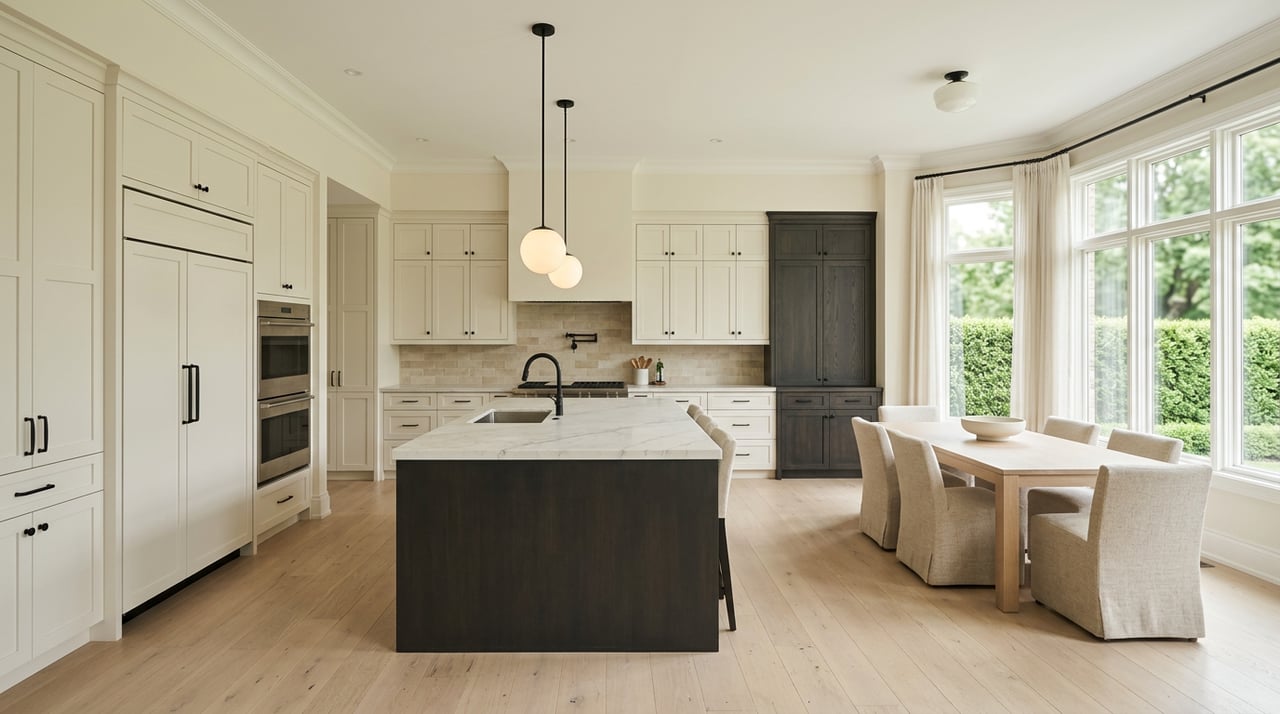
You get one shot to make a powerful first impression online. In Oyster Bay’s mid-to-upper market, most buyers start on their phones, and the first 7 to 14 days decide how many showings you book and how strong your offers are. If you want faster results and the best net, your launch needs to be media rich, precisely targeted, and measured. This guide shows you exactly how to market your Oyster Bay home for maximum impact, with a proven plan you can put in place before you list. Let’s dive in.
Why marketing matters in Oyster Bay
Oyster Bay’s market commands attention and rewards polished presentation. Recent snapshots place the median sale price near $880,000 with a mid-to-high days-on-market pace, and sale-to-list prices hovering around 99%. County-level reporting shows a median close price near $835,000 in Q4 2025 for single-family homes, with a mix of mid-market suburbs and high-end waterfront pockets.
Buyers here are digital-first. National research shows many buyers start their search online, and they rate photos as the most useful listing feature. Floor plans and virtual tools help them visualize layout and qualify homes faster. In short, better media and smarter distribution expand your buyer pool and improve the odds of strong offers. Referencing these trends helps you anchor your strategy to how buyers actually shop today.
The media that move results
Professional photography
Professional stills are your baseline. Studies consistently associate pro photos with faster sales and meaningful average price lifts in many price tiers. Buyers also say photos are the most useful element when viewing homes online, which makes them the one asset you cannot compromise.
For Oyster Bay listings, invest in a full package: interior and exterior sets, detail vignettes, and a twilight hero image if curb appeal shines at dusk. Typical retail packages often fall in the hundreds, and many providers offer add-ons like drone or video. You can review market-rate examples from services that publish real estate photography pricing to help frame your budget. Consider starting with a standard package and upgrading to include drone or a short lifestyle set if your lot or setting warrants it. For a sense of typical pricing ranges, see published examples from providers like HomeJab’s real estate photography pricing.
Video and 3D tours
Short videos and 3D tours increase time-on-listing, saves, and qualified showing requests because buyers understand flow before they visit. National buyer research also shows that virtual tools and floor plans help buyers screen homes, which means fewer unqualified showings and more motivated in-person tours. Platform and vendor studies often report faster sales when a 3D tour is present, especially when adoption in the area is still moderate.
Use video and 3D when your home has complex flow, multiple levels, large square footage, or unique features that benefit from context. A 60 to 90 second horizontal walkthrough plus a 15 to 30 second vertical cut covers most channels. If remote or relocation buyers are part of your audience, a 3D tour paired with a downloadable floor plan is one of the highest-impact upgrades.
Drone and aerials
Aerials sell context quickly. In Oyster Bay, that means lot size, yard utility, orientation, proximity to water, and surrounding streetscape. Typical drone add-ons are commonly in the low hundreds, and they pair well with a twilight exterior for a compelling first image. For ballpark add-on ranges, you can reference published drone real estate photography pricing.
Confirm your operator’s FAA Part 107 certification and Remote ID compliance. An experienced pilot will advise on any local constraints and obtain permissions where needed. For rules and credentials, review the FAA’s summary of Part 107 drone regulations.
Staging and virtual staging
Staging is a measurable advantage. In recent national research, nearly one‑third of sellers’ agents observed staging increased dollar offers in the 1 to 10 percent range, and many reported reduced time on market. If a full install is not practical, targeted edits can still clarify scale and layout.
Virtual staging is a cost‑efficient alternative for certain rooms. Be transparent. NAR advises clear disclosure for any digitally altered images to protect credibility and avoid buyer confusion. You can read more about the impact of staging in NAR’s coverage of how home staging boosts sale prices and reduces time on market, and about ethical media practices in “Are you catfishing buyers with picture‑perfect photos?” from NAR’s magazine section: picture‑perfect real estate photos.
Build a targeted online launch
MLS and syndication basics
MLS syndication remains the backbone of exposure. Make sure your listing launches with complete data, polished photos, a floor plan, and any available 3D or video links. NAR’s consumer guide underscores publishing accurate, thorough property details and leveraging MLS distribution to major portals. If you want a quick refresher on the essentials, see the consumer guide to marketing your home.
Property microsite and lead capture
A dedicated property microsite centralizes everything buyers want: full photo gallery, video and 3D tour embeds, floor plan download, neighborhood highlights, and a clear book‑a‑showing call to action. Use this page as the destination for your paid ads so you can track visits, scroll depth, form fills, and showing requests.
Landing page research shows focused pages often convert at higher rates than generic pages, especially with well targeted traffic and retargeting. For context on conversion norms, review industry benchmarks on landing page conversion rates.
Paid ads that reach real buyers
Use a smart mix of Google Search, YouTube, and social placements to match buyer intent. Search captures high-intent queries like your address or neighborhood. YouTube showcases your video tour to likely movers. Social platforms help you target by location and interests and retarget people who already visited your microsite.
Budget framing helps you plan. Industry summaries show real estate clicks typically cost a few dollars on search and often less on social, with higher costs in affluent suburbs. Your goal is not raw lead count. Track cost per qualified showing request and per booked showing. For directional ad benchmarks and planning, see compiled Google Ads statistics.
A focused two‑week push in Oyster Bay commonly starts in the $500 to $2,000 range across search, social, and retargeting. Larger or waterfront properties may warrant more creative and a higher budget.
Win the first 7 to 14 days
Your listing gets the most attention right after it goes live. Concentrate your media, promotion, and outreach in this window. Track views, saves or favorites, microsite sessions, video completion rates, showing requests, and booked showings. National buyer research confirms that many buyers begin online and prioritize rich media, so your early performance is a direct function of presentation and distribution. You can review buyer behavior in NAR’s Generational Trends report.
Budget and ROI framing
Typical costs to plan for
Use these common ranges to scope your package. Final quotes vary by house size, complexity, and provider.
- Professional photography: often $150 to $400 for standard packages, with higher tiers for larger or luxury homes. See example ranges in HomeJab’s pricing.
- Video walkthroughs: roughly $300 to $1,200 depending on length and production value.
- 3D tours and floor plans: many vendors start near $150 to $600+ depending on square footage. See ranges summarized in this overview of real estate photography costs.
- Drone imagery: commonly $150 to $500 as an add‑on for stills and a short aerial video. Example add‑on ranges appear in this drone pricing reference.
- Property microsite: DIY templates can be low cost, while bespoke pages can range from a few hundred to a couple thousand depending on copy, SEO, and mapping needs. Benchmarks support the investment when conversion rates outpace generic pages. See context on landing page conversion performance.
A simple ROI lens
You do not need guaranteed outcomes to justify strong media. If a $350 photo package contributes to an offer that is several thousand dollars higher, it pays for itself many times over. Studies consistently show correlations between professional media and faster sales, along with average dollar uplifts in many price tiers. Final results always depend on pricing, condition, comps, and negotiation, so treat these as likely returns rather than promises.
Your pre‑launch checklist
Use this quick list to keep your marketing-first launch on track.
- Finalize a data-informed list price with recent comps and clear positioning.
- Complete a deep clean and minor repairs that show up on camera.
- Approve a staging or styling plan, even if it is a focused refresh of key rooms.
- Schedule professional photography with a shot list that includes a twilight exterior.
- Add a 60 to 90 second video, a 3D tour, and a downloadable floor plan if layout merits it.
- Confirm drone needs, operator’s Part 107 credentials, and any local permissions.
- Disclose any virtual staging or edits in the image captions.
- Build a property microsite with media embeds and a book‑a‑showing form.
- Launch a two‑week paid plan across search, YouTube, and social with retargeting.
- Track views, saves, site sessions, video completion rates, showing requests, and offers.
- Set a reporting cadence for the first two weeks, then biweekly.
Compliance and transparency
Drone rules to know
Any commercial drone work must follow FAA Part 107 regulations. Your pilot should be able to show credentials and explain Remote ID compliance. Review the FAA’s Part 107 guidance to understand the basics.
Transparent editing
Be clear when images are virtually staged or significantly retouched. Transparency protects credibility, keeps buyers informed, and avoids friction after showings. NAR’s magazine guidance on picture‑perfect real estate photos is a helpful reference.
How we market Oyster Bay homes
You deserve a launch that blends design excellence with financial discipline. The Farber Locke Team delivers a two‑principal approach: Lori brings CPA‑level pricing and negotiation insight, and Jodi leads on‑the‑ground execution and staging. That means you get premium media and an analytical plan that turns attention into results.
Our listing playbook centers on professional photography, video and 3D tours when they add value, and a polished property microsite for clean storytelling and lead capture. We syndicate through the MLS, run targeted search, YouTube, and social campaigns, and report on the metrics that matter: views, saves, microsite sessions, video completion, showing requests, and offer activity. You get timely updates in the first two weeks, then steady check‑ins calibrated to market feedback.
If you are planning to sell in Oyster Bay or along the North Shore, we would be honored to guide your launch, from staging to closing. Ready to see what your home could sell for with a marketing‑first plan? Connect with the Farber Locke Team to Get Your Instant Home Valuation.
FAQs
Will professional photos make my Oyster Bay home sell for more?
- Studies associate professional photography with faster sales and meaningful average price lifts in many markets; final outcomes still depend on pricing, condition, demand, and negotiation.
Are 3D tours worth it for North Shore listings?
- Yes when layout is complex, your home is larger, or you expect out‑of‑area buyers; 3D tours improve understanding and often reduce unqualified showings while increasing qualified interest.
What marketing must my agent include for maximum impact?
- Professional photos, a video or 3D tour when relevant, an MLS‑syndicated listing with a floor plan, a dedicated property microsite, a defined paid‑ads plan, and a clear reporting cadence.
How much should I budget for launch ads in Oyster Bay?
- Many mid‑to‑upper listings start with $500 to $2,000 spread across search, YouTube, and social for the first two weeks; track cost per qualified showing request, not just cost per lead.
Is drone photography legal for listing my home?
- Yes when flown by an FAA Part 107 certified operator who follows Remote ID rules and any local restrictions; ask your agent to confirm the pilot’s credentials and permits.
